By: Melissa Barlock
Have you ever wondered why some messages resonate immediately, while others, even well-intentioned ones, fall flat?
Often, the difference isn’t what is being said.
It’s how persuasion is being delivered.
Recently, I began teaching as a professor at a College, where I lead a Public Relations course called Persuasive Communication & Presentations. Many of the conversations in that classroom mirror what I see every day in leadership, business, and professional environments: people want to communicate clearly and persuasively, but they aren’t always sure why certain messages work and others don’t.
This is where the modes of persuasion, sometimes referred to as persuasive proof, become incredibly helpful.
In this blog, I’ll walk you through these foundational principles, explain why they matter, and show how they continue to shape effective communication today. If you prefer to watch or listen, the link included with this post will take you to my YouTube video on the same topic, where I explore these ideas in more depth.
What Are the Modes of Persuasion?
Persuasion isn’t manipulation.
At its best, persuasion is about helping people understand, connect, and choose with clarity.
The modes of persuasion come from the work of Aristotle, one of the earliest thinkers to formally study rhetoric, the art of persuasive communication. He introduced what we now call the rhetorical triangle, made up of logos, ethos, and pathos.
Although these ideas are centuries old, they remain deeply relevant in leadership, business, Public Relations, presentations, and everyday communication.
Logos: Logical Proof
The first mode of persuasion is logos, or logical proof.
Logos appeals to our reason and thinking mind. It answers questions like:
- Does this make sense?
- Is there evidence?
- Is the reasoning clear?
In practice, logos shows up through:
- Facts and data
- Statistics and research
- Examples and explanations
- Clear cause-and-effect reasoning
You might hear logos in statements like:
- “The data shows a measurable improvement.”
- “Research supports this approach.”
- “Here’s what the evidence tells us.”
Logos is essential because it helps people understand. But understanding alone doesn’t always lead to trust or action.
Ethos: Credibility and Trust
The second mode of persuasion is ethos.
Ethos is about credibility, character, and trust. It answers a quiet but powerful question:
Why should I listen to you?
Ethos is established through:
- Experience and expertise
- Transparency and honesty
- Consistency over time
- Alignment with shared values
Ethos isn’t about authority for authority’s sake. It’s about showing up as someone who is reliable, grounded, and accountable.
When ethos is strong, people are more open, even before you make your case.
Pathos: Emotional Connection
The third mode of persuasion is pathos.
Pathos appeals to emotion and human experience. It answers:
- Why does this matter?
- How does this affect people?
- What’s the human impact?
Pathos shows up through:
- Stories and personal examples
- Empathy and compassion
- Purpose-driven messaging
This might sound like:
- “Let me share a story.”
- “This matters because it affects real lives.”
Pathos is what makes communication memorable. People may debate facts, but they connect through feelings.
Why All Three Matter
The strongest persuasive communication uses all three modes together:
- Logos to explain
- Ethos to build trust
- Pathos to connect
When one is missing:
- Logos without pathos feels cold
- Pathos without ethos feels manipulative
- Ethos without logos feels unclear
When all three are present, persuasion feels natural, respectful, and effective.
What This Looks Like in Business and Professional Settings
These principles show up every day in the workplace.
For leaders and business professionals, logos appears when explaining decisions or sharing data. Ethos is built through transparency, consistency, and integrity. Pathos shows up when leaders connect decisions to people, purpose, and impact.
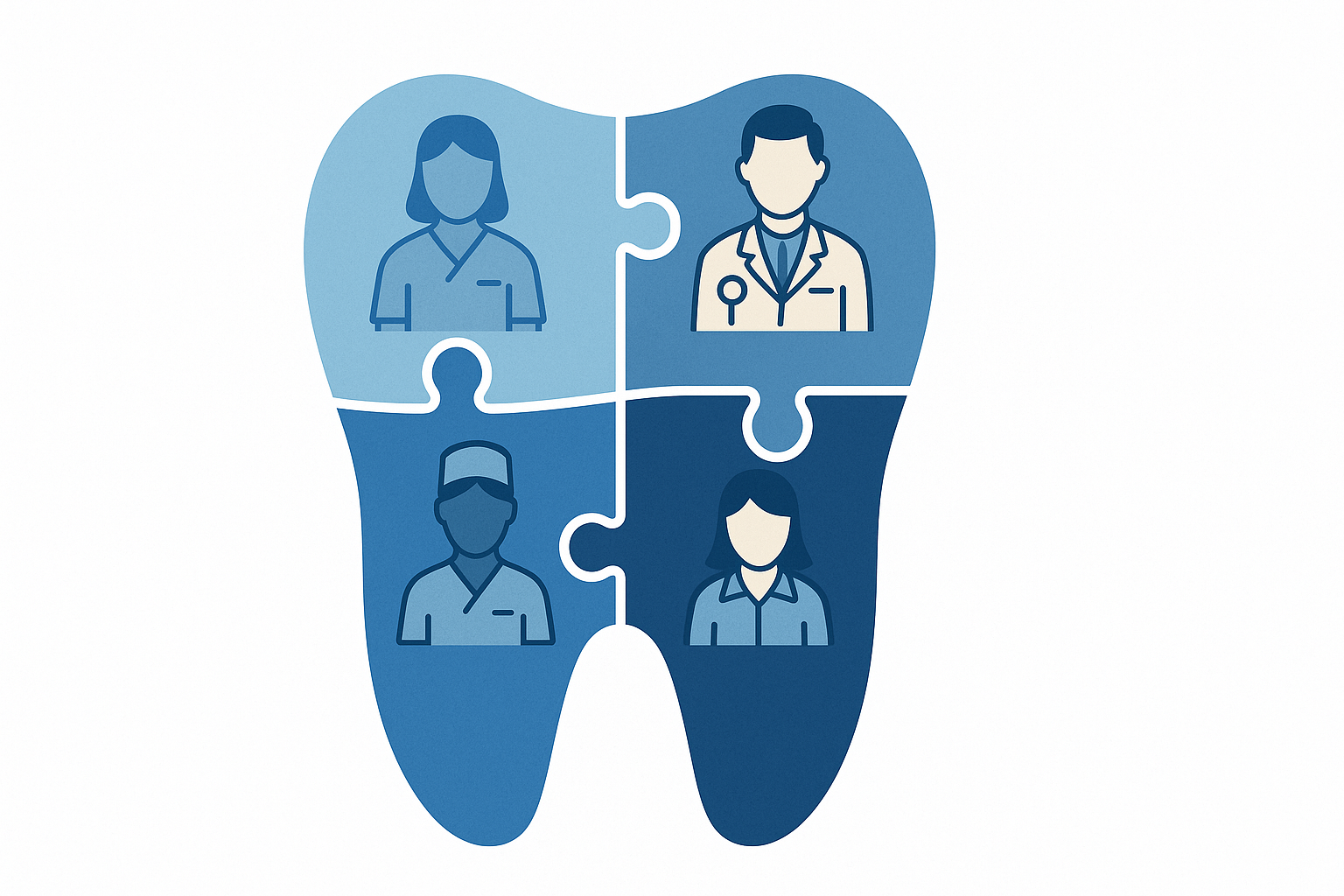
In dental offices and healthcare environments, these modes are especially important. Treatment discussions, financial conversations, team communication, hiring, onboarding, and change management all rely on persuasive communication. Patients and team members don’t just want information, they want clarity, trust, and reassurance.
When communication balances logic, credibility, and empathy, conversations become clearer, resistance decreases, and trust grows, both internally and externally.
At Enspire Dental Opportunities, much of the work I do with leaders and teams is grounded in these same principles of persuasive communication. Whether it’s leadership development, team training, communication workshops, or support around talent and culture, the focus is always on helping people communicate more clearly, lead more confidently, and build environments where both individuals and organizations can thrive.
If this topic resonates with you and you’re looking to strengthen communication within your team or organization, I invite you to explore more of what we do at Enspire, or simply start a conversation. Sometimes the most meaningful change begins with clarity around how we communicate.
Watch the Video Version
If you’d like to explore this topic further, I’ve also created a YouTube video where I walk through the modes of persuasion with practical examples and real-world context.
👉 Copy & Paste: https://youtu.be/x3pMdmtj__E?si=kUgMskTh3gHc9ryn
Persuasion isn’t about pressure or control.
It’s about connection, clarity, and trust.
When we understand how logos, ethos, and pathos work together, we become better communicators, stronger leaders, and more thoughtful influencers, whether we’re presenting, leading a team, or navigating everyday conversations.
That’s the power of persuasive communication.
Enspire Dental Opportunities is looking forward to working with you.